Collaborative Online Theater is an emerging artistic discipline that fuses the raw intimacy of live performance with the expansive reach of digital streaming technology. It creates a virtual space where creative professionals can assemble, rehearse, and perform for a global audience in real-time, removing the physical constraints of traditional venues.


1. The Director: The Visionary and Architect
In this collaborative environment, the Director acts as the primary curator of the experience. Their responsibilities extend beyond traditional blocking to include digital world-building:

Scripting and Storyboarding
Crafting narratives specifically designed for a digital interface, often incorporating interactive or branching paths.
Talent Curation
Scouting and auditioning actors from across the globe, looking for performers who can command a digital space and handle the nuances of 'webcam-acting.'
Environment and Prop Design
Preparing physical props and backgrounds while integrating static or dynamic animatable digital puppets to enhance the visual narrative.
Technical Coordination
Managing the technical 'backstage' and assuming control over complex digital character movements. By handling technical triggers and emotional micro-expressions of digital puppets, the director allows actors to focus purely on their vocal talent and movement.
2. The Actors: Performance and Guidance

In this medium, real actors perform live, utilizing a "digital puppet" as a sophisticated extension of their character rather than a replacement. This requires a hybrid skill set that blends classical performance with digital puppetry:
Live Performance & Coaching
Actors deliver their performance under the real-time guidance of the Director, utilizing private audio channels or visual cues to adjust their delivery, much like a stage manager’s prompts in a physical theater.
Digital Presence
Performers must master their moves and learn how to collaborate closely with the director to execute special 'puppet moves', while maintaining the emotional intensity of a live play.
Remote Synchronization
Working with scene partners who may be thousands of miles away, actors rely on low-latency technology to maintain the timing and rhythm essential to dramatic performance.
3. The Viewer: The Digital Experience
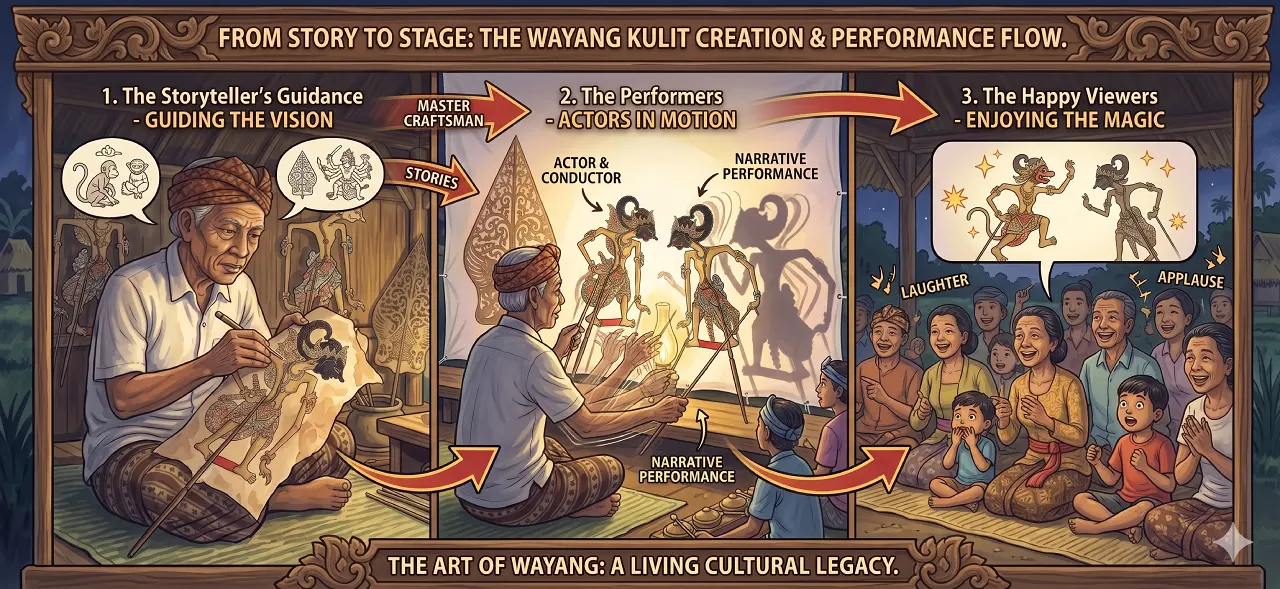
The 'stage' is no longer a wooden floor but a specialized streaming platform that integrates multiple video feeds into a single, cohesive narrative experience accessible from anywhere, at any time. Much like a group of children gathered for a live puppet theater, viewers watch the story unfold live on their screens; however, instead of focusing on the physical puppeteers, they are immersed in the digital performance, with the added ability to interact directly with the actors and storytellers in real-time.
Live Stream
High-definition broadcasting that captures the raw, unpredictable energy of a live performance.
On-Demand Access
A global reach that allows anyone to join from any device, anywhere in the world, at any time.
Active Participation
Real-time tools—like live chat and interactive plot choices—that transform viewers from passive observers into part of the story.